 English
 Français
 Español





PackTaki is a packaging brand to help customer success. With more than 10 years of experience in printing and making, Specialized in producing and designing customized packaging products.
You face thousands of packaging suppliers online. Each one promises perfection. The fastest path forward? Define your needs before you search.
Ask yourself sharp questions. Do you need rigid boxes for a luxury serum? Or lightweight cartons for a subscription box? Your product's weight, fragility, and sales channel dictate the answer.
Market data confirms the stakes. The global custom packaging market reaches $55.1 billion in 2026, growing 6.3% annually. Boxes and cartons dominate at 39% share. Beauty brands cannot ignore this momentum.
Sustainability and smart packaging are non-negotiable in 2026. Your branded custom beauty product box must reflect eco-friendly values. Effective custom packaging protects your product and your brand simultaneously.
This guide delivers a step-by-step framework. You'll filter out bad fits and find a partner who scales with your cosmetic packaging box needs. Your branding deserves nothing less.
Key Takeaways
-
Know what you need for your packaging before you look for a supplier.
-
Check suppliers on materials, printing, and minimum order sizes.
-
Check that the product is good and meets the rules by looking at certifications and test samples.
-
Make eco-friendly choices the top focus for both materials and design.
-
Balance cost, delivery speed, and shipping to build a dependable partnership.
Assess Your Packaging Needs
Start with your product, not your supplier. Your custom cosmetic bottles have a certain weight, size, and fragility. These factors decide your box structure before you ever contact a vendor.
Match Box Structure to Product Needs
Product weight is your first filter. Light items like lip balm, mascara, or eyeliner work well in cardboard cosmetic boxes. These simple paperboard structures include folding cartons, sleeve boxes, or window boxes. They protect small tubes without extra cost.
Medium-weight products need more support. Skincare pump bottles and plastic cream containers fit folding cartons with thicker paperboard. Simple inserts keep them safe during shipping. You avoid over-packaging while still protecting the product.
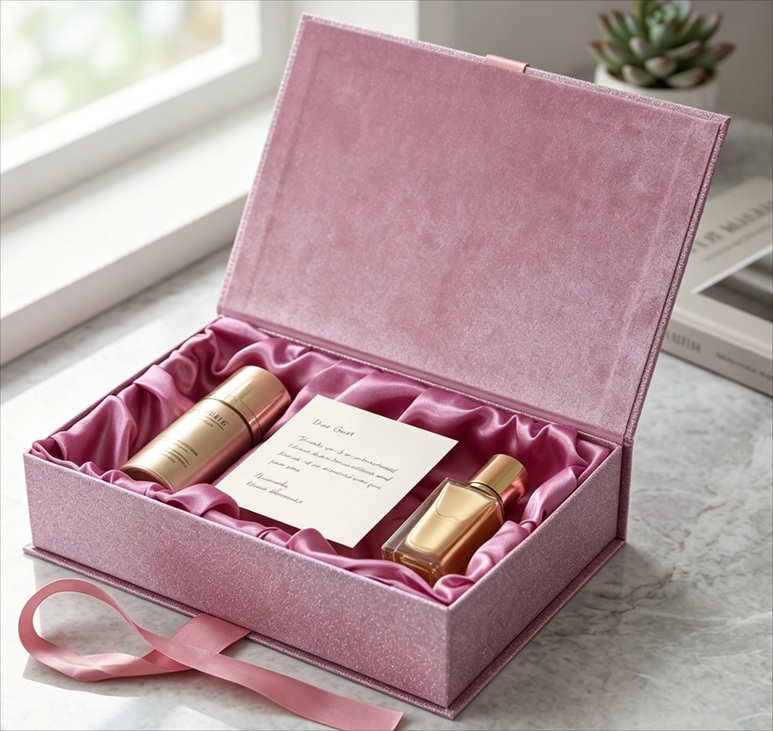
Heavy items need rigid cosmetic boxes. Glass jars, serum bottles, and perfume containers require two-piece boxes, drawer boxes, or magnetic closure boxes. These structures give stronger support and better inner fixing. Fitted inserts stop movement and breakage.
Your container's shape matters too. Pumps, droppers, and curved shoulders need exact dimensions. Measure everything carefully. A box that fits too loose damages your product. A box that fits too tight frustrates your customer.
Align Packaging with Brand Positioning
Your packaging design must show your brand identity. Material and finish tell your values before anyone touches your product. Choose wisely.
Eco-friendly beauty brands pick kraft cosmetic boxes. These natural materials signal sustainability and authenticity. Pair them with water-based inks and recycled content. Your customers see your environmental commitment right away.
Premium lines need different choices. Quiet luxury aesthetics use clean lines, neutral palettes, and matte finishes. High-quality materials show understated elegance. Your packaging becomes part of the product experience itself.
Think about smart packaging features. QR codes and NFC tags engage customers with product information. Augmented reality creates memorable unboxing moments. These elements boost your branding and encourage social media sharing.
Your branded custom beauty product box tells your story. Every material choice, every finish, every structural detail reinforces your position. Strong brand identity comes from consistent packaging decisions. Beauty brands that align packaging with positioning build lasting customer loyalty.
Remember your cosmetic packaging materials must balance beauty with function. Protection, preservation, and performance matter as much as appearance. The right structure and design work together. Your packaging becomes your silent salesperson.
Evaluate Suppliers for Custom Cosmetic Boxes
Check Material Options and Printing Techniques
Your custom cosmetic packaging box needs the right material and print method. A supplier's material range tells you if they can match your product. You have three common options to consider.
|
Material |
Key Characteristics |
Best Use Case |
|---|---|---|
|
Kraft |
Natural paper appearance, pairs with minimal design |
Brands seeking eco-friendly, simple paper packaging |
|
Corrugated |
Fluted layer for cushioning and strength |
Shipping subscription boxes, cosmetic sets, larger items |
|
Rigid Board |
Sturdy, thick boards, solid construction |
High-end cosmetics, gift packs, premium items |
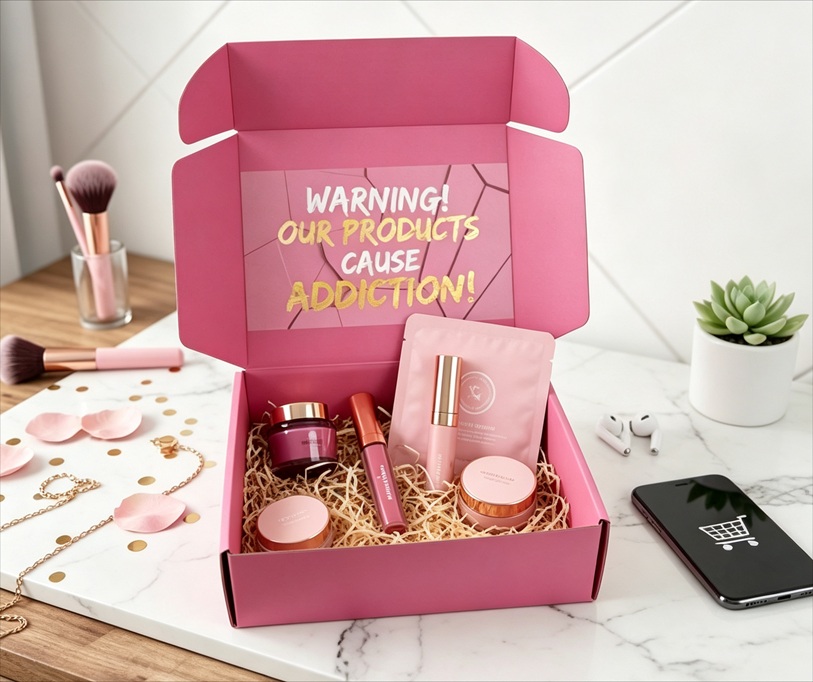
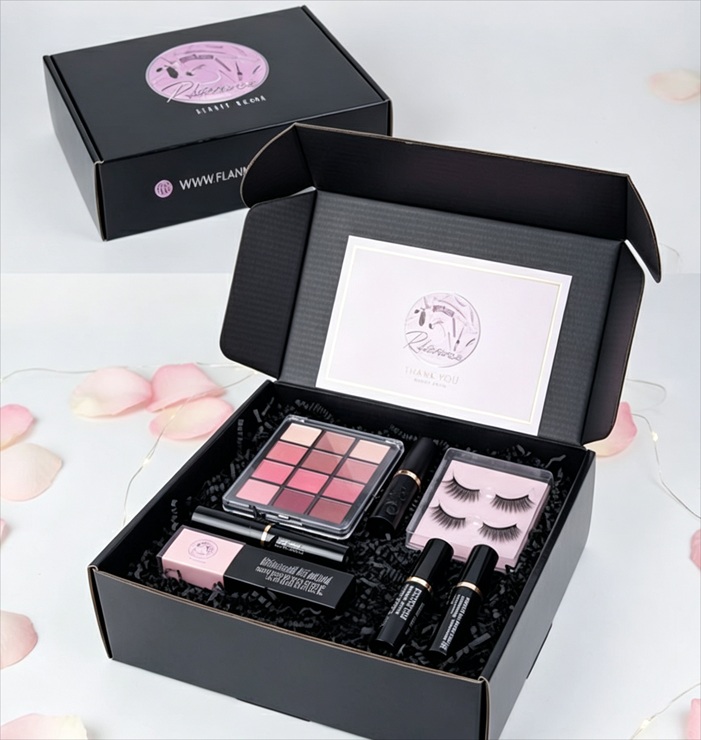
Kraft cosmetic boxes work well for eco-conscious beauty brands. Cardboard cosmetic boxes suit lighter products like lip balms. Rigid cosmetic boxes protect heavy glass bottles and premium items. Your choice of cosmetic packaging materials shapes your brand identity.
Printing techniques also matter. You have two main options.
|
Printing Technique |
Process |
Key Advantages |
|---|---|---|
|
Digital Printing |
Direct printing without plates |
Short runs, samples, limited editions, frequent design changes |
|
Offset Printing |
Ink transferred via plates |
Clear details, uniform color, suitable for large quantities |
Digital printing helps you test new designs with low risk. Offset printing delivers consistent quality for large batches. Suppliers like PackTaki offer one-stop shopping for multiple packaging types. This simplifies logistics and reduces costs. You can order kraft cosmetic boxes, cardboard cosmetic boxes, and rigid cosmetic boxes from the same source. They also provide digital and offset printing options. This gives you flexibility for your branded custom beauty product box.
Understand Minimum Order Quantities (MOQs)
Minimum order quantities (MOQs) vary by supplier and design complexity. Digital printing allows MOQs as low as 25 units. Complex designs or premium materials increase MOQs. Private label products with standard packaging may have MOQs of 100-500 units. Custom formulations often require over 1000 units.
You can negotiate favorable MOQs. Commit to regular orders rather than one-time purchases. Propose a graduated MOQ that increases as your relationship develops. Offer faster payment terms in exchange for lower minimums. Consolidate orders across product lines to meet overall volume requirements. Share forecasts and growth plans to demonstrate future potential.
PackTaki supports low MOQs for testing. This helps you verify consistency before full-scale production. Their standardized production process ensures quality from digital files to final packaging. You can order custom packaging solutions from one partner. This reduces your supplier management burden.
Your brand benefits from a supplier who understands your needs. The right partner offers flexible MOQs, diverse materials, and quality printing. They help you grow your brand without compromising your identity. Your packaging becomes a tool for branding and customer engagement.
Verify Quality and Compliance Standards
Your branded custom beauty product box must meet strict safety rules. The cosmetic industry faces more rules in 2026 than ever before. You cannot skip this step. A supplier who ignores compliance puts your customers and your reputation at risk.
Certifications and Material Safety
Cosmetic packaging materials must not harm the product inside. You need proof that your supplier follows international standards. Look for specific certifications that show real commitment to quality.
|
Regulatory Framework |
Scope for Cosmetic Packaging (2026) |
Required Compliance Action |
|---|---|---|
|
US FDA MoCRA |
Safety substantiation, facility registration, product listing |
Ensure adequate safety data; prepare for forthcoming FDA GMP rules for cosmetics |
|
EU Regulation (EC) No 1223/2009 |
Packaging and formula compliance |
Verify both packaging and formula meet the regulation's requirements |
|
EU REACH & CLP |
Substances and mixtures in packaging |
Ensure substances in packaging comply with registration, evaluation, and classification duties |
|
EU Microplastics Restriction |
Evolving restrictions on microplastics in packaging |
Proactively remove PFAS-based coatings, inks, and barriers; find alternative materials |
These frameworks demand action. You must test for migration and compatibility. These tests check that packaging parts do not transfer harmful substances into your formula. You also need barrier performance testing. Light-sensitive formulas need opaque or tinted containers. Oxygen-sensitive products need airless pumps or nitrogen flushing. Tight seals protect liquids and semi-solids during shipping.
Beyond regulatory compliance, look for third-party certifications that show consistent quality:
-
ISO 9001:2015 Registration: Shows a structured quality management system that ensures consistent processes and ongoing improvement.
-
GMI Certification: A worldwide program for packaging printers, ensuring consistent color management across production runs.
-
G7 Master Qualification: Shows best practices in graphic communications production.
-
ISO/IEC 17025 Compliance: Certifies testing laboratories as competent and impartial.
-
SQF Food Safety Code: Registration for food packaging manufacturing, ensuring global food safety compliance.
-
GMP Certificate of Conformity: Confirms compliance with hygiene principles for printing and converting films.
For cosmetic-specific needs, focus on ISO 22715 for packaging standards and ISO 22716 for Good Manufacturing Practices. FSC certification ensures your paper-based custom cosmetic boxes come from sustainable sources. A mid-sized organic skincare brand entered the EU market successfully by switching to a specialized manufacturer. They used FSC-certified paper and achieved full ISO 22715 compliance. The higher initial investment became a key differentiator, driving big brand growth.
Prototyping and Pre-Production Samples
You must see your packaging before committing to full production. Ask for both 3D previews and physical samples. Each evaluation method serves a different purpose.
|
Evaluation Method |
Primary Use for Custom Cosmetic Box Prototypes |
Key Limitation |
|---|---|---|
|
3D Render / Appearance Mockup |
Approve design direction, proportions, color combinations, finish direction, logo scale |
Cannot confirm production tolerances or manufacturing repeatability |
|
Decorated Stock Sample |
Evaluate printable area, logo position, color contrast, decoration methods |
Does not represent a new custom structure |
|
3D Printing |
Review shape, proportions, handling, ergonomics, assembly conflicts |
Does not confirm final resin behavior or sealing performance |
|
CNC Machining |
Provides tight geometric control, rigid parts, flat sealing surfaces |
Does not copy molding flow or production economics |
|
Vacuum Casting |
Produce several similar samples, multiple color options, small-run assembly reviews |
Polyurethane material differs from final injection-molding resin |
|
Pilot Run |
Validate molding stability, assembly sequence, decoration consistency, process yield |
Requires ongoing production control after approval |
Start with a 3D render to approve the overall look. Then ask for a physical sample. Check print quality, color accuracy, structural integrity, and finish consistency. Your custom cosmetic bottles need exact fit. Test how the box holds the bottle during a simulated drop. Check seal integrity for liquids.
Suppliers like PackTaki run 100% quality inspections. This ensures every unit matches your approved sample. They also provide 3D previews before production starts. This saves you time and money. You catch design flaws early. You avoid expensive rework.
Your packaging must protect your product through the whole supply chain. Distribution integrity testing checks that your packaging withstands drops, vibration, and temperature changes during global shipping. Laboratory contaminant analysis tests for chemical migration and heavy metals. These steps confirm your packaging will not contaminate your product or break down over time.
Quality is not a choice. Your brand identity depends on consistent, safe packaging. Beauty brands that check compliance and test prototypes build lasting customer trust. Your custom cosmetic boxes must meet every standard. Your customers expect nothing less.
Prioritize Sustainability in Cosmetic Packaging Materials
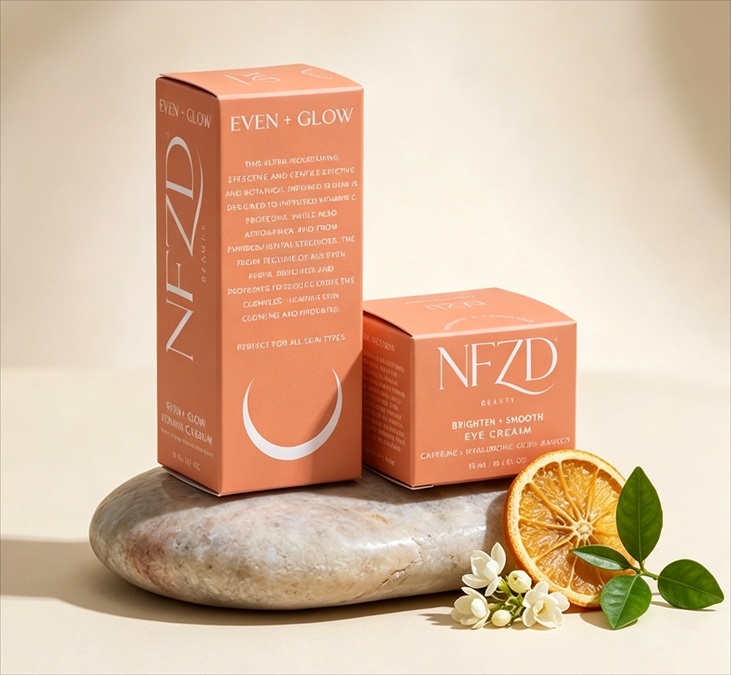
Sustainability is now a must for your cosmetic packaging. Shoppers want clear proof of eco-friendly actions. The global sustainable packaging market hits USD 2.10 billion in 2025 and grows at 5.05% CAGR, reaching USD 3.44 billion by 2035. You need to keep up with this change.
Sourcing Eco-Friendly Materials
Your choice of cosmetic packaging materials directly affects your environmental footprint. LUMENE's study found that packaging makes up 35% of total carbon impact. You need materials that lower this load.
Several eco-friendly options exist today. Molded pulp offers a compostable choice for inserts. Hemp fiber provides strength with little impact. Sugarcane bagasse turns agricultural waste into renewable paperboard. Post-consumer recycled content cuts down virgin material use. Home-compostable materials like mycelium are gaining popularity for natural breakdown. Upcycled substrates using plant waste, such as Wilkinson Sword's 55% plant waste packaging, show circular economy promise.
The Devera system helps you analyze carbon footprints while following GHG Protocol standards. This tool enables streamlined Life Cycle Assessment for comparing different cosmetic packaging materials. You can make smart choices based on real impact data. This boosts your branding while supporting sustainability goals.
Suppliers like PackTaki focus on eco-friendly solutions. They offer free custom designs for your sustainability needs. You can source kraft paper, recycled content, and biodegradable options from one partner. This makes your supply chain easier while supporting your brand identity.
Designing for Recyclability and Reuse
About 80% of packaging's environmental impact is set during the design process. Your design choices matter most. Start with minimalist packaging that avoids extra layers. Right-size your containers to cut material use.
Refillable options encourage reuse of containers. Refillable jars, lipsticks, and foundation bottles extend product life. Multi-use containers like makeup palettes with interchangeable inserts serve multiple purposes. Lightweight options reduce material weight and lower emissions.
Use widely accepted recyclable materials. Glass and aluminum offer endless recyclability. Post-consumer recycled plastic reduces virgin material demand. Biodegradable options like bamboo and plant-based plastics provide alternatives for specific uses.
Innovative features improve function while reducing waste. Airless pumps protect sensitive formulas without over-packaging. Magnetic closures allow easy access and reuse. Modular systems let customers replace only the empty part. Collapsible tubes reduce shipping volume.
Teach your customers how to dispose properly. Include recyclability symbols on your packaging. Provide QR codes linking to take-back programs. Share upcycling ideas that give your packaging a second life. Transparency builds trust and reinforces your brand values.
Your packaging becomes a statement of your brand values. Smart sustainability choices set your products apart in a crowded market. Beauty companies that focus on eco-friendly solutions build lasting customer loyalty.
Balance Cost, Lead Times, and Shipping
Picking a supplier only because they are cheap can cause hidden problems. You might see poor print quality, late deliveries, or surprise fees. You need to think about cost, timing, and shipping reliability together.
Getting Transparent Quotes
Your custom cosmetic boxes have different prices based on their structure and how many you order. Knowing these price ranges helps you plan your budget.
|
Packaging Type |
MOQ Range |
Cost per Unit |
|---|---|---|
|
Basic Folding Carton |
1,000-5,000 units |
$0.50 - $2.00 |
|
Basic Folding Carton |
10,000+ units |
$0.15 - $0.75 |
|
Mid-Range Folding Carton |
1,000-5,000 units |
$1.50 - $4.00 |
|
Mid-Range Folding Carton |
10,000+ units |
$0.60 - $1.80 |
|
Standard Rigid Box |
500-2,000 units |
$4.00 - $12.00 |
|
Standard Rigid Box |
5,000+ units |
$2.50 - $7.00 |
|
Luxury Rigid Box |
500-2,000 units |
$8.00 - $25.00+ |
|
Luxury Rigid Box |
5,000+ units |
$5.00 - $15.00 |
|
Eco-Friendly Folding Carton |
1,000-5,000 units |
$0.80 - $3.00 |
|
Eco-Friendly Folding Carton |
10,000+ units |
$0.30 - $1.20 |
Many things affect these prices. The material type is the biggest factor. Kraft is the cheapest, cardboard is in the middle, and rigid board costs the most. Thicker paper raises the price per box. Full-color CMYK printing is standard, but Pantone colors add extra cost. Finishing touches like foil stamping, spot UV, and embossing each increase the price. Custom inserts add value but also raise expenses.
Ask every supplier for a detailed quote. Request a breakdown of material, printing, finishing, and tooling costs. Good suppliers give clear pricing with no hidden fees. They also provide 3D mockups before you commit. This preview confirms your design and helps you avoid expensive changes later.
Negotiating Delivery Schedules
Standard lead times for custom packaging range from 3 to 8 weeks. The complexity of your design and the supplier's workload affect this window. Rapid prototypes often arrive in 3-5 days. Mass production typically takes 10-30 days after sample approval. Plan ahead to avoid rush fees.
Shipping methods also affect your timeline and budget.
|
Shipping Method |
Typical Transit Time |
Cost Implication |
|---|---|---|
|
Express |
3-7 business days |
Highest cost, best for samples and urgent needs |
|
Air Freight |
7-15 days |
Faster than sea, moderate cost |
|
Sea Freight |
25-45 days |
Most economical, slowest option |
Sea freight works well for large orders with flexible deadlines. Air freight balances speed and cost for launch-critical timelines. Express delivery handles urgent small shipments. Your choice affects your total packaging investment.
You can negotiate better terms with the right approach. Combine orders across product lines to increase volume. Commit to regular production cycles rather than one-time purchases. Ask for lower MOQs, faster turnaround, and better payment terms like 50/50 instead of full upfront. Build relationships before negotiating. Schedule video calls to understand their production capabilities. Ask about pricing tiers and upcoming availability changes.
Get every agreement in writing. Send a summary of pricing, quantities, delivery schedules, and payment terms. Formalize with a contract or purchase order. This protects your brand and ensures accountability.
Suppliers like PackTaki offer flexible shipping options worldwide. They provide sea, air, and express delivery with DDP/DDU door-to-door service. Their global reach simplifies logistics for growing beauty brands. Quality packaging solutions arrive on time when you plan strategically.
Test Communication and Request Samples
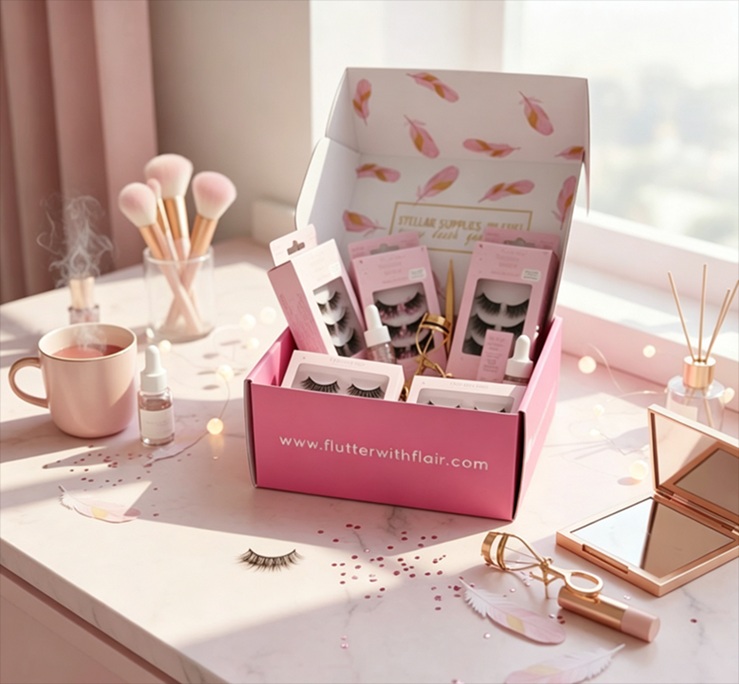
How well your supplier communicates can make or break your project. A quick, helpful partner solves problems fast. A slow one can delay your launch. So test their support before you commit.
Assessing Responsiveness and Support
Good communication leads to better service. It helps avoid running out of stock and keeps your supply chain moving. When you set clear expectations for performance and delivery, your relationship gets stronger. This reduces mix-ups that cause costly delays. Honest feedback loops build trust over time. You catch problems early. You fix them before they turn into big, expensive issues.
Find suppliers who offer 24/7 support. Packaging problems do not wait for business hours. A supplier who answers at midnight can save your launch. They handle urgent orders quickly.
Test how responsive they are before you order. Send a detailed question about your custom packaging needs. Time how long they take to reply. Pay attention to the quality of their answer. A vague response signals trouble ahead. A specific, helpful answer shows real expertise.
The Final Sample Review Process
Ask for multiple samples from different production batches. This shows you if they are consistent. Check color, texture, and finish on each sample. Compare them side by side. Your branded custom beauty product box must look the same every single time.
|
Quality Check Category |
Specific Focus for Final Sample Review |
Rationale for the Check |
|---|---|---|
|
Material Inspection |
Confirm high-grade materials match your brand values |
Ensures the physical substrate meets your standards |
|
Color Consistency |
Match printed colors to your brand guidelines |
Prevents mismatches that hurt shelf appeal |
|
Structure Testing |
Assess durability through compression and impact tests |
Verifies the box protects contents during transit |
|
Finishing Quality |
Analyze lamination, spot UV, or foil stamping |
Ensures premium aesthetics are correctly applied |
|
Folding Quality |
Inspect crisp waves, aligned edges, no misfolds |
Poor folding fails on shelves or damages contents |
|
Gluing |
Stress-test corners, seams, and lid closures |
Reliable adhesives prevent box failure |
Test your packaging with real products inside. Put your custom cosmetic bottles in the box. Shake it gently. Drop it from a low height. Check that inserts hold everything securely. Test closures and seals for liquid products. Your packaging structure must handle real-world use.
Store samples for two to four weeks under normal conditions. Watch for color changes, odor shifts, or texture breakdown. This shelf-life test reveals hidden problems. Your packaging must protect your product over time. Strong packaging prevents costly returns.
Share samples with your target audience. Collect honest feedback about the unboxing experience. Their impressions shape how they see you. Use their input to refine your design before mass production. Good packaging creates memorable first impressions.
Suppliers like PackTaki conduct 100% quality inspections. Every unit matches your approved sample. They provide 3D previews before production starts. You catch design flaws early. You avoid expensive rework. Their packaging expertise helps you avoid common mistakes.
Your packaging quality reflects your brand commitment. A thorough sample review prevents disappointing surprises. Beauty brands that test rigorously build lasting customer trust.
Final Checklist for Supplier Selection
You have gathered quotes, reviewed samples, and tested communication. Now you need a clear way to compare your top choices. A weighted scoring system turns opinions into clear, fair decisions.
Scoring Potential Partners
Start by defining what your business needs today. Collect requirements from team members across your company. Separate must-have pass/fail items from scored factors. Assign clear measurements to each item before you contact suppliers.
Set your weights before reviewing proposals. Do not change the model after suppliers send their offers. This keeps your review fair and consistent.
|
Category |
Recommended Weight |
|---|---|
|
Certifications and Compliance |
30% |
|
Manufacturing and Capacity |
20% |
|
Quality and Reliability |
20% |
|
Pricing and Terms |
15% |
|
Support and Service |
10% |
|
Geographic Coverage |
5% |
Certifications carry the highest weight because missing compliance can cause legal trouble or product rejection. No pricing deal offsets that risk. Manufacturing capacity and quality follow closely behind. These factors determine whether your supplier can deliver consistently at scale.
Define your scoring scale and specify what evidence suppliers must provide. Validate the framework with all stakeholders. Confirm everyone agrees on requirements, weights, and rules before you evaluate anyone.
Red Flags to Avoid
Watch for warning signs during your evaluation. These indicators reveal unreliable partners before you commit.
-
Vague pricing: A quote that arrives with no questions asked may be incomplete. Ask what the quote includes.
-
Lack of certifications: Generic or outdated certificates signal problems. Verify certificate numbers through the issuing body.
-
Unknown production location: Evasive answers about manufacturing locations indicate subcontracting risk.
-
High pressure to pay immediately: Inflexibility about upfront payment can signal cash flow problems.
-
Refusal to document decisions: Without written specs and sample notes, disputes increase.
-
No clarity on subcontracting: Undisclosed subcontracting changes quality and ethics without notice.
Your packaging reflects your brand identity. A supplier who cannot provide transparent pricing, verifiable certifications, and clear communication will damage your branding. The right partner supports your sustainability goals with eco-friendly options and consistent quality.
Score your top two or three suppliers using this framework. The cheapest option rarely delivers the best long-term value. Your custom cosmetic boxes deserve a partner who grows with you.
You have moved from checking your product needs to approving final samples. The cheapest supplier rarely gives the best long-term value. Use your weighted checklist to score your top choices.
Finish your partnership with these steps. First, confirm compliance documents and packaging safety. Second, lock in your design with physical mockups. Third, place your order and manage production actively.
Start this vetting process now to secure production slots for your next launch. Your branded custom beauty product box needs a partner who delivers steady quality, eco-friendly materials, and reliable communication. The right supplier becomes a long-term asset for your brand's success.
FAQ
What is the minimum order quantity for custom cosmetic boxes?
MOQs change based on design and material. Digital printing lets you order as few as 25 units for simple boxes. Rigid boxes usually start at 500 units. You can ask for lower MOQs by agreeing to order regularly.
How do I request samples before placing a large order?
Ask your supplier for 3D previews and real samples. Check the print quality, color accuracy, and how strong the box is. Test the box with your product inside. Many suppliers give this service.
What sustainability certifications should I look for in a packaging supplier?
Look for FSC certification for paper materials. Also check ISO 9001 for quality control. These certifications make sure the packaging is eco-friendly and dependable.
How long does production take?
Normal production times are 3 to 8 weeks. Quick samples take 3-5 days. Full production takes 10-30 days after you approve the sample. Plan early to avoid extra fees.
How can I balance cost and quality?
Do not pick a supplier only by price. Ask for detailed quotes. Check the material quality and printing methods. A good supplier gives steady quality and clear prices.