For e-commerce businesses, packaging is more than a container for delivering products. It protects orders during transportation, influences shipping costs, and creates the first physical interaction between an online brand and its customers. Choosing the right packaging can improve fulfillment efficiency while reducing product damage and unnecessary material use.
Two commonly used options are mailer boxes and shipping boxes. Although these terms are sometimes used interchangeably, they serve different packaging needs. Mailer boxes are often designed for direct-to-consumer deliveries and branded unboxing experiences, while conventional shipping cartons are generally selected for their structural strength, stacking performance, and logistics requirements.
So, which option is better for an e-commerce business? The answer depends on product weight, dimensions, fragility, order volume, shipping distance, and brand positioning. This guide compares mailer boxes and shipping boxes to help online retailers, subscription brands, and packaging buyers make a practical decision.
What Is the Difference Between Mailer Boxes and Shipping Boxes?
A mailer box is a packaging structure designed to hold and ship individual products or small collections of items. Many styles feature a folding corrugated construction, integrated lid, and locking tabs. They can often be assembled without additional tape, making them convenient for e-commerce fulfillment.
A traditional shipping box is generally a corrugated carton designed primarily for transportation and handling. It commonly uses a separate top and bottom closure secured with packing tape. Depending on the product and shipping requirements, it may use single-wall or double-wall corrugated board.
The main distinction is not simply the material. It is how the packaging is designed and used throughout the order fulfillment process.
| Comparison |
Mailer Box |
Traditional Shipping Box |
| Structure |
Foldable, often with an integrated lid |
Separate flaps, commonly taped closed |
| Assembly |
Often quick and tape-free |
Usually requires folding and sealing |
| Branding |
Suitable for interior and exterior printing |
Often focused on exterior branding and shipping information |
| Typical Use |
DTC orders, subscription boxes, retail products |
Bulk shipments, heavier goods, warehouse distribution |
| Packaging Experience |
More brand-focused |
More logistics-focused |
It is worth noting that mailer boxes can also be made from corrugated cardboard. A mailer box is not necessarily weaker than every traditional shipping carton. Its actual performance depends on board grade, flute construction, dimensions, and product weight.
For businesses looking for a branded, ready-to-ship packaging solution, custom corrugated mailer boxes provide a practical starting point.
When Should E-Commerce Brands Choose Mailer Boxes?
Mailer boxes are particularly useful when the packaging itself is part of the customer experience. Their clean folding structure and customizable surfaces allow brands to create a consistent visual identity from the moment an order arrives.
They are commonly used for:
- Subscription boxes containing curated products.
- Clothing, accessories, and boutique retail orders.
- Skincare and cosmetic product sets.
- Small gifts and lifestyle products.
- Promotional kits and influencer packages.
- Lightweight products sold through direct-to-consumer channels.
For example, a skincare brand shipping a monthly product set may prefer a custom mailer box with printed interior graphics, a fitted insert, and a branded exterior. Customers receive a package that feels consistent with the brand's retail presentation rather than an ordinary transport carton.
Mailer boxes can also simplify packing operations. Integrated folding panels and locking tabs may reduce the need for separate sealing materials, depending on the box design.
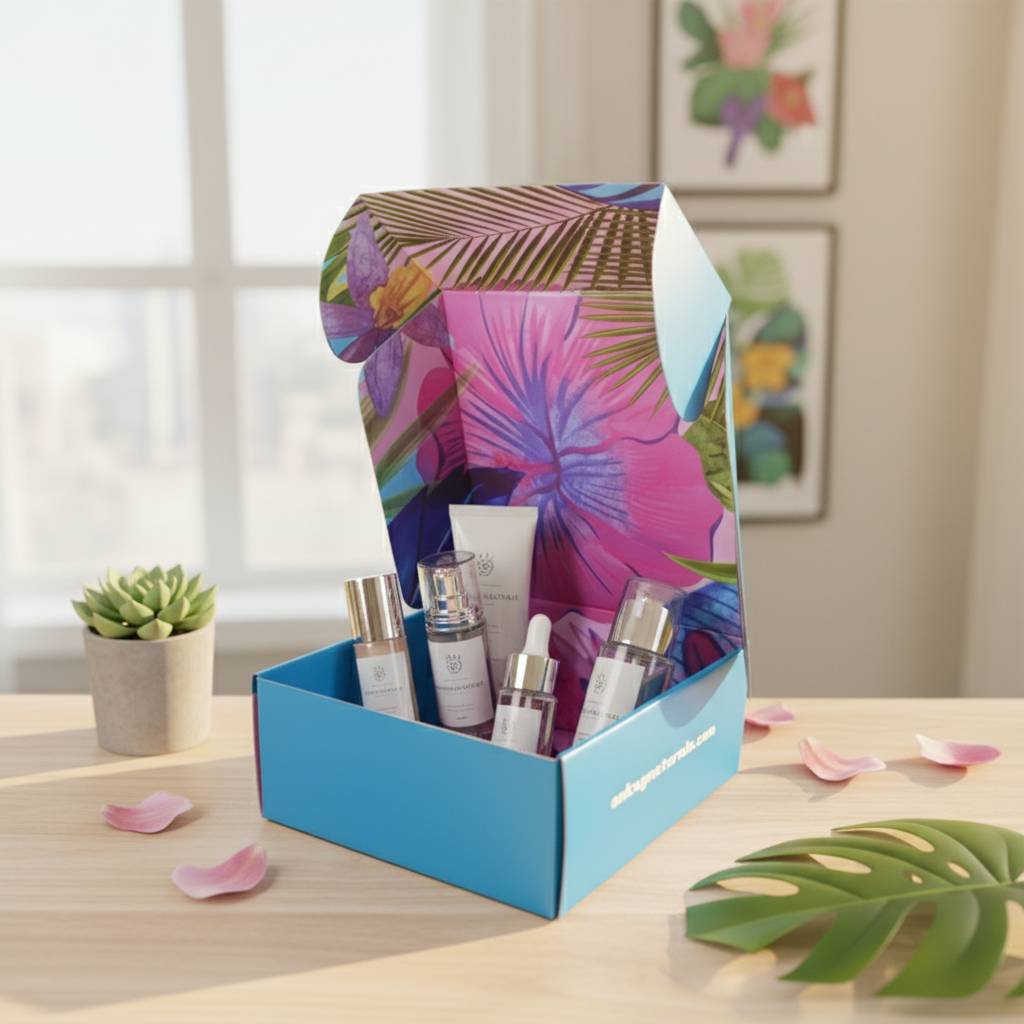
PackTaki offers customizable eco-friendly e-commerce mailer shipping boxes with custom dimensions, full-color printing, and optional surface finishes. These designs are suitable for cosmetics, apparel, gifts, and other branded shipments.
When Are Traditional Shipping Boxes a Better Choice?
Traditional shipping boxes are often the more practical option when transportation protection is the main priority. Their design can accommodate different corrugated board strengths, internal dividers, protective inserts, and additional sealing materials.
They are commonly used for:
- Heavy or bulky products that require additional structural support.
- Multiple-item orders with different product shapes.
- Fragile goods that need customized internal protection.
- Wholesale shipments and warehouse distribution.
- Products that will be stacked during storage or transportation.
- Orders moving through longer or more demanding shipping routes.
For example, an online electronics retailer shipping several accessories in one order may need a larger carton with individual compartments. A conventional shipping box allows the business to arrange dividers, cushioning materials, and protective inserts according to the products inside.
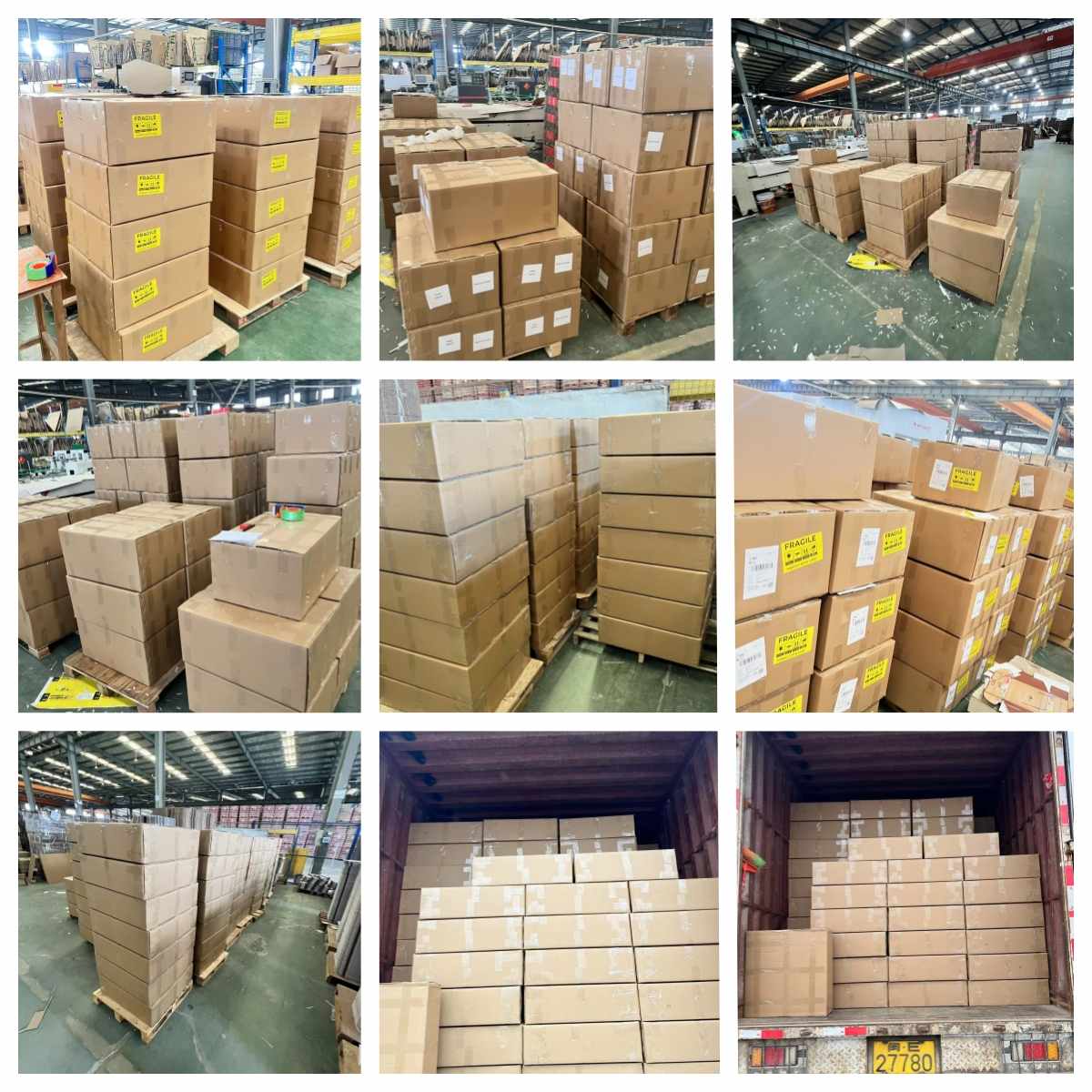
When cartons are stacked in warehouses or loaded onto pallets, their compression performance also becomes important. The correct board construction should be selected according to the total load, stacking height, storage conditions, and transportation environment.
Businesses that ship products in larger quantities should also consider how outer cartons fit into their pallet and warehouse handling systems. Packaging that works well for an individual parcel may not be the most efficient choice for bulk distribution.
How Packaging Choice Affects E-Commerce Shipping Costs
Packaging costs involve more than the purchase price of an individual box. E-commerce businesses should consider the total cost of packaging, including material usage, assembly labor, storage space, transportation charges, and product damage.
Dimensional weight: Many parcel carriers calculate shipping charges using dimensional weight when a package occupies more space than its actual weight suggests. Oversized packaging can therefore increase delivery costs even when the product itself is lightweight.
Packaging material: A box that is unnecessarily large or uses excessive board thickness can increase material costs. Right-sizing the package helps control both material consumption and shipment volume.
Assembly time: Mailer boxes with integrated folding structures may reduce the time needed for packing. Traditional cartons may require additional tape, folding, and sealing operations.
Storage efficiency: Both mailer boxes and conventional corrugated cartons can be supplied flat before assembly. However, their dimensions and stacking arrangements should be considered when calculating warehouse storage requirements.
Damage and returns: Packaging that provides insufficient protection can result in damaged products, customer complaints, replacement shipments, and additional logistics costs. Choosing the cheapest box is not necessarily the most economical decision.
A useful approach is to compare the total packaging and fulfillment cost per order rather than looking only at the unit price of the box.
How to Improve the Customer Unboxing Experience
For online brands, packaging is often the first physical representation of the business that customers receive. A well-designed package can make an ordinary delivery feel more personal and strengthen brand recognition.
Mailer boxes provide several opportunities to improve this experience.
Custom exterior printing: Brand logos, signature colors, and product graphics make the package recognizable before it is opened.
Interior printing: Printing inside the lid can introduce brand messages, product instructions, or personalized notes. This is especially useful for subscription services and gift-oriented businesses.
Fitted inserts: Paperboard or other suitable inserts help organize products and prevent unnecessary movement inside the package.
Finishing options: Matte or glossy lamination, embossing, and spot UV can create different visual and tactile effects. The appropriate finish depends on the brand's positioning and budget.
Protective presentation: Tissue paper, paper padding, and shredded paper can provide additional cushioning while making the opening process more organized.
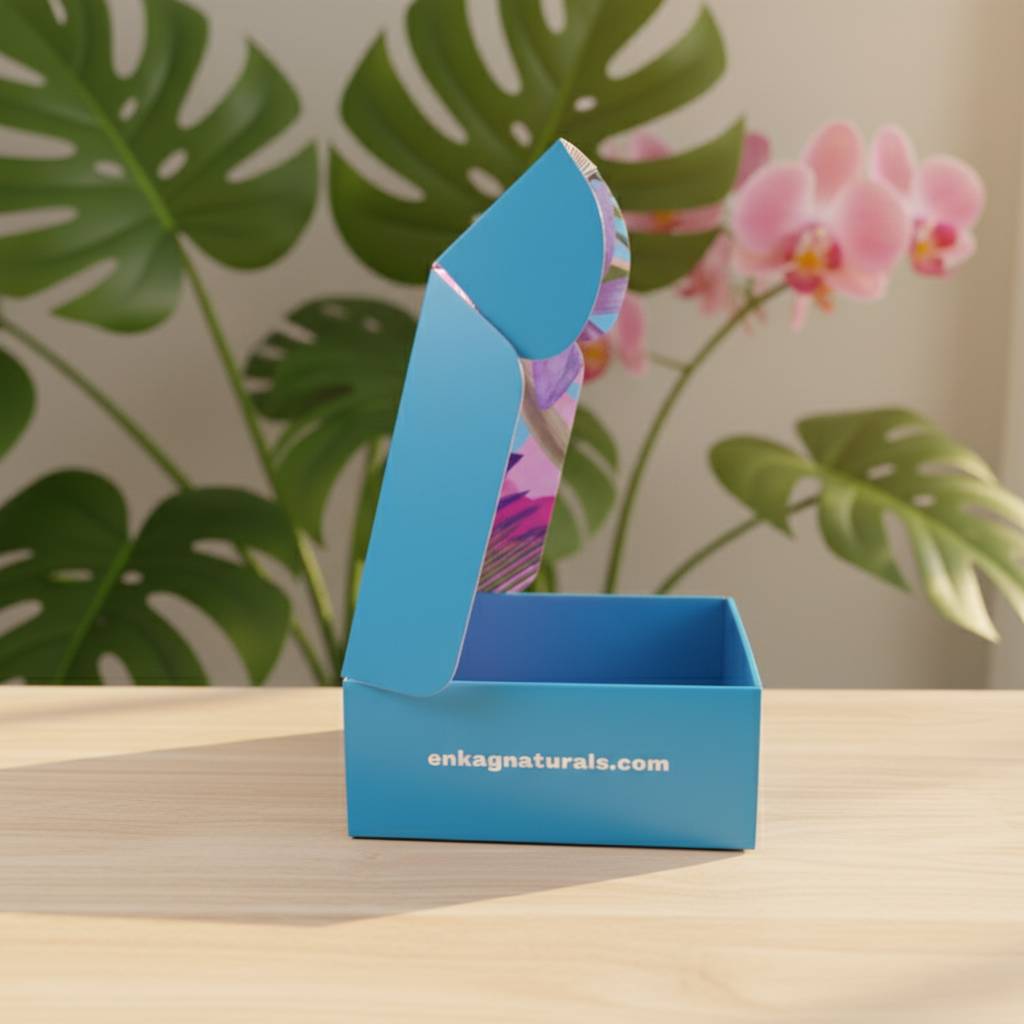
For brands that want a more distinctive delivery experience, personalized mailer packaging can be developed around the product dimensions, brand colors, and preferred opening style.
Should You Use Additional Protective Packaging?
Even a well-designed outer box may need additional internal protection. The right combination depends on the product's shape, weight, fragility, and movement during transportation.
Common protective packaging options include:
- Corrugated inserts: Useful for separating multiple items and keeping products in fixed positions.
- Paper cushioning: Helps fill empty spaces and reduce movement inside the package.
- Shredded paper: Suitable for lightweight gifts, cosmetics, and retail presentation.
- Bubble mailers: Useful for smaller, relatively flat products that need surface cushioning.
- Protective wrapping: Helps prevent scratches and surface damage for products with delicate finishes.
The objective is to prevent excessive movement without adding unnecessary packaging volume. Fragile items such as glass containers, ceramic products, and electronic components may require a more carefully designed insert system.
For smaller orders that do not require a rigid box, protective bubble mailer bags can be considered for suitable products. However, they should not replace a rigid carton when the product needs structural protection against crushing.
What to Consider When Choosing Sustainable E-Commerce Packaging
Sustainability has become an important purchasing consideration for online retailers. However, selecting packaging based only on whether it is labeled recyclable or eco-friendly can lead to misleading conclusions.
Businesses should evaluate several factors before making a material decision.
Recyclable materials: Corrugated cardboard is widely collected for recycling in many markets. However, coatings, laminations, adhesives, and other components can affect how easily a finished package is processed.
Material reduction: Right-sizing packaging and avoiding unnecessary layers can reduce material consumption and transportation volume.
Recycled content: Suitable recycled paper fibers may be incorporated into packaging materials, depending on the required strength, appearance, and product specifications.
Reusable packaging: Certain sturdy boxes may be reused by customers or within business distribution systems, extending their useful life.
Protection efficiency: Sustainable packaging should still protect the product effectively. If inadequate packaging results in frequent damage and replacement shipments, the overall environmental impact may increase.
For e-commerce brands, the most practical solution is often a properly sized corrugated package that provides sufficient protection without unnecessary material use.
How to Select the Right Packaging for Different E-Commerce Products
Different product categories have different packaging requirements. The following examples provide a starting point for selecting a suitable structure.
Clothing and fashion accessories: Lightweight apparel, scarves, and accessories are often suitable for custom mailer boxes or mailing bags. Brands selling premium collections may prefer printed mailer boxes to create a more consistent retail experience.
Cosmetics and skincare: Individual products and gift sets can use mailer boxes with fitted inserts. The internal structure should prevent bottles and jars from moving during transportation.
Electronics and accessories: Products containing delicate components may require a stronger outer carton combined with customized protective inserts. Packaging should be selected according to the product's weight and drop-risk requirements.
Subscription products: Monthly product kits often benefit from mailer boxes because they combine convenient assembly, consistent dimensions, and customizable interior printing.
Small gifts and jewelry: A compact mailer box with a suitable inner presentation box can provide both protection and a premium unboxing experience.
Large or multi-item orders: Conventional corrugated shipping cartons are often more practical when the package needs to hold several products, internal dividers, or heavier contents.
For businesses shipping different product types, using more than one packaging format may be more efficient than forcing every order into a single box design.
What Should Buyers Confirm Before Ordering Custom Mailer Boxes?
Before placing a bulk order, e-commerce businesses should prepare a clear packaging specification. This helps the supplier recommend an appropriate structure and reduces the risk of problems during production.
- Product dimensions: Provide the length, width, and height of the product, including any protective wrapping.
- Product weight: Confirm the total packed weight to help determine the required board construction.
- Box dimensions: Specify the required internal dimensions and allow enough space for inserts or cushioning.
- Material requirements: Discuss corrugated board type, flute structure, thickness, and recycled material options.
- Printing artwork: Prepare the logo, colors, graphics, and interior or exterior printing requirements.
- Finishing details: Confirm whether matte or glossy finishes, embossing, or other treatments are required.
- Order quantity: Estimate monthly or annual demand to help determine production arrangements.
- Shipping destination: Consider the transportation route, parcel handling conditions, and delivery requirements.
It is also advisable to request a pre-production sample. A physical sample allows the buyer to check assembly, product fit, printing quality, and overall presentation before approving mass production.
PackTaki supports customized packaging projects, including size adjustments, artwork customization, pre-production samples, and quality inspection. Its mailer box product range includes different styles for e-commerce, gifts, cosmetics, apparel, and other retail applications.
Why Choose PackTaki for Custom E-Commerce Packaging?
For e-commerce businesses sourcing packaging in bulk, a reliable supplier should understand both packaging appearance and practical shipping requirements.
PackTaki specializes in customized packaging design and manufacturing, offering solutions for online retailers, consumer brands, and wholesale buyers.
Its shipping packaging range includes custom mailer boxes, mailer bags, bubble mailers, and shipping tape. Businesses can explore different packaging formats according to their product types, order volumes, and fulfillment requirements.
PackTaki provides OEM and ODM customization, including:
- Customized box dimensions and structural designs.
- Full-color printing and brand logo customization.
- Different corrugated paper and finishing options.
- Pre-production samples and design confirmation.
- Production inspection and international shipping arrangements.
With more than ten years of packaging industry experience, PackTaki supports customers throughout the packaging development and ordering process.
Whether you need a branded mailer box for direct-to-consumer orders or a practical packaging solution for larger shipments, the right design should reflect both your product requirements and your fulfillment strategy.
Explore PackTaki's custom packaging solutions to find a suitable packaging format for your e-commerce business and discuss your next project with the team.
Frequently Asked Questions About Mailer Boxes and Shipping Boxes
What is the main difference between a mailer box and a shipping box?
A mailer box usually has an integrated folding structure and is designed for convenient individual shipments and branded presentation. A traditional shipping box commonly uses separate flaps sealed with tape and is often selected for transportation, storage, and bulk distribution.
Are mailer boxes suitable for e-commerce shipping?
Yes. Mailer boxes are widely suitable for e-commerce orders involving clothing, cosmetics, accessories, subscription products, and other appropriately sized goods. The board strength and internal protection should match the product's weight and shipping conditions.
Are mailer boxes stronger than regular shipping boxes?
Not necessarily. Strength depends on corrugated board construction, flute type, dimensions, and box design. A properly specified traditional carton may provide better stacking performance, while a well-designed corrugated mailer can provide adequate protection for individual parcels.
Which packaging is better for small businesses?
Mailer boxes can be a good option for small businesses that prioritize branding and individual customer deliveries. Traditional shipping cartons may be more practical for businesses shipping heavier products or multiple items in one order.
Can mailer boxes be customized with a company logo?
Yes. Custom mailer boxes can include exterior and interior printing, brand logos, custom colors, product information, and different finishing options. Dimensions and structural details can also be adjusted to fit specific products.
Are corrugated mailer boxes recyclable?
Many corrugated mailer boxes are made from paper-based materials that can be recycled through suitable local paper recycling systems. However, coatings, laminations, and other added components may affect recyclability, so the complete packaging structure should be checked.
How can I reduce e-commerce packaging costs?
Choose packaging that closely matches product dimensions, avoid unnecessary empty space, use suitable material strength, and evaluate assembly and transportation costs. Testing the package before mass production can also help reduce damage-related expenses.
What information is needed for a custom mailer box quotation?
Buyers should provide product dimensions, product weight, required box size, order quantity, material preferences, printing artwork, finishing requirements, and shipping destination. These details help the packaging supplier recommend an appropriate design and prepare an accurate quotation.
 English
 Français
 Español